
Does Gua Sha Actually Reduce Puffiness? What the Research Says
November 2, 2026
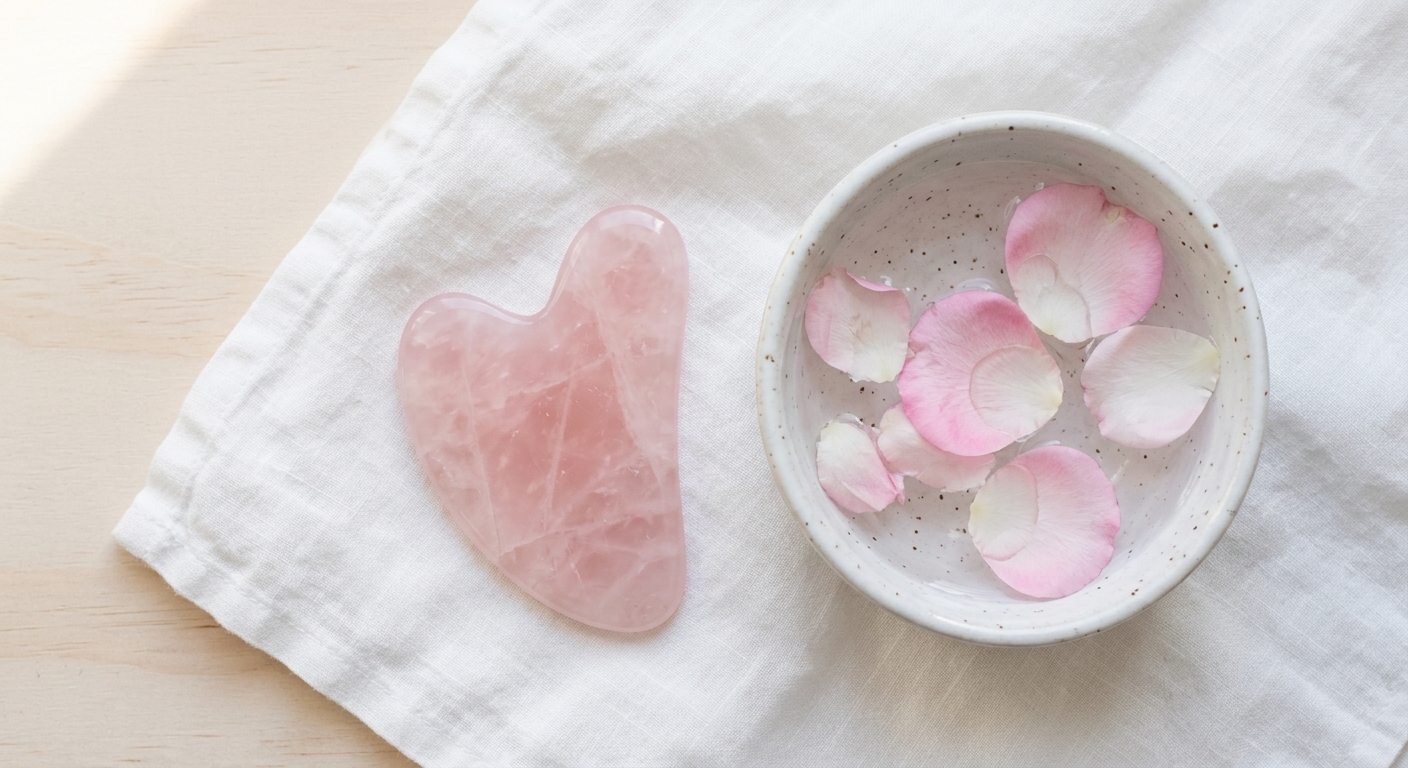
Gua sha has a reputation for de-puffing — scroll any beauty feed and you'll find before-and-after videos showing visibly slimmer jawlines and less swollen under-eyes after a few minutes of scraping. But how much of that is real, how much is temporary, and how much is lighting? Here's what the evidence actually says.
What causes facial puffiness in the first place?
Most morning puffiness is the result of fluid pooling in facial tissue overnight. When you're lying flat, lymphatic drainage slows and interstitial fluid accumulates, particularly around the eyes, cheeks, and jaw where the tissue is looser. Inflammation from sun exposure, alcohol, sodium, or allergies adds to this. Structural factors — facial fat, bone density, skin elasticity — don't change day to day.
What gua sha can actually do
Gua sha moves fluid. The sweeping strokes create mechanical pressure that pushes lymphatic fluid toward the lymph nodes at the neck and collarbone, where it drains into the circulatory system. This is the same principle behind manual lymphatic drainage (MLD), a clinical technique used post-surgery to reduce edema.
A 2021 pilot study in the Journal of Traditional and Complementary Medicine found that regular gua sha on the face and neck reduced peri-orbital edema (eye puffiness) in participants compared to a control group. The effect was consistent but modest — meaningful improvement in chronic puffiness, not dramatic transformation.
Increased local circulation also plays a role. The tool pressure temporarily dilates capillaries, improving blood flow. This gives the skin a brighter, firmer appearance immediately after use — which is partly why the results look so pronounced in before-and-afters shot within 10 minutes of the routine.
What gua sha can't do
It can't change bone structure, remove fat, or permanently slim the face. It can't replace sleep, reduce chronic inflammation from diet, or fix allergic puffiness. Any jaw-slimming effect visible right after a session is largely cosmetic — the fluid has moved, not dissolved. For most people, some of that puffiness returns by the next morning.
Claims about "lifting" are also mostly overstated. Gua sha doesn't tighten loose skin in any lasting clinical sense. It may temporarily improve tone through circulation, but it's not a substitute for collagen support, sun protection, or retinoids over time.
When the research is thin
It's worth being honest: facial gua sha is under-studied. Most RCTs on gua sha focus on musculoskeletal conditions (neck pain, back pain), where the evidence is stronger. The cosmetic applications have much smaller study populations and fewer controlled trials. The mechanism makes physiological sense, but the clinical evidence for specific claims like "lifts cheekbones" or "reduces jowls" is largely anecdotal.
How to use gua sha for actual de-puffing results
If you want the best drainage effect, technique matters more than tool quality. The key is direction and pressure — you're moving fluid toward lymph nodes, not massaging in circles.
- Start clean. Apply a facial oil or serum so the tool glides without dragging. Dry skin cancels the benefit.
- Work bottom-up on the face, top-down on the neck. Drain the neck first by sweeping downward from jaw to collarbone. Then sweep upward and outward from chin to ear, cheek to temple, brow to hairline — always directing fluid toward drainage points.
- Light pressure under the eyes. The tissue here is thin and fragile. Use the curved concave edge of the tool, almost no downward pressure, and sweep gently from inner to outer corner.
- 3–5 passes per stroke, 4–5 strokes per zone. More isn't better. Overworking an area can cause capillary damage and temporary redness.
- Do it in the morning. That's when puffiness is highest and drainage makes the most visible difference. Evening use is fine for tension relief, but the de-puffing payoff is smaller.
Who sees the best results
People with chronic morning puffiness — particularly those who sleep on their side, have high sodium intake, or regularly drink alcohol — tend to see the most consistent improvement with a daily routine. People with minimal puffiness to begin with see less dramatic change (there's less fluid to move).
Skin type doesn't significantly affect drainage results, though people with sensitive or rosacea-prone skin should use lighter pressure and monitor for redness.
The honest summary
Gua sha reduces fluid-related puffiness — that part is real and physiologically sound. The results are temporary and proportional to how much fluid accumulation you're starting with. It won't restructure your face, but as a daily practice to reduce morning swelling, improve circulation, and give skin a brighter baseline, it earns its reputation. Just go in with realistic expectations.
For technique guidance, see our beginner's guide and our post on gua sha for neck and shoulder tension — the drainage strokes on the neck directly affect how well facial de-puffing works.